فندق الكتانين
Our home一座19世纪的商队驿站,坐落于非斯古麦地那的中心——也是我们餐厅的所在地。
Before hotels existed, Fès had fondouks. These merchant inns were the beating heart of the old Medina: a courtyard below for goods and animals, galleries of rooms above for the traders who arrived with caravans from across Morocco and beyond. Around their fountains, deals were struck, stories were exchanged, and travellers from distant cities shared a meal after weeks on the road.
非斯拥有数十座这样的历史建筑,每一座都以其所服务的行业命名——木匠、金匠、制革匠。而我们的这座,则属于亚麻织工。
Fondouk Kettanine — also known as Fondouk Jdid, "the new fondouk" — was built in the late 19th century, during the reign of Sultan Moulay Hassan I, to lodge the merchants visiting the city. It stands in Al Qatanin, the historic quarter of the cotton and linen traders, whose craft the fondouk's name still carries: kettan means linen. In 1981, the entire Medina of Fès — the fondouk among its living monuments — was inscribed as a 联合国教科文组织 World Heritage Site.
"Guests have arrived here for more than a century. Now, we cook for them."
Today, this monument welcomes travellers once again. We restored its rooftop with respect for the building's soul — zellige, cedar and carved plaster — and turned the terrace above the old courtyard into Fez Medina Rooftop Restaurant & Lounge. When you dine with us, you're not just visiting a restaurant: you're continuing a story that began more than a century ago.
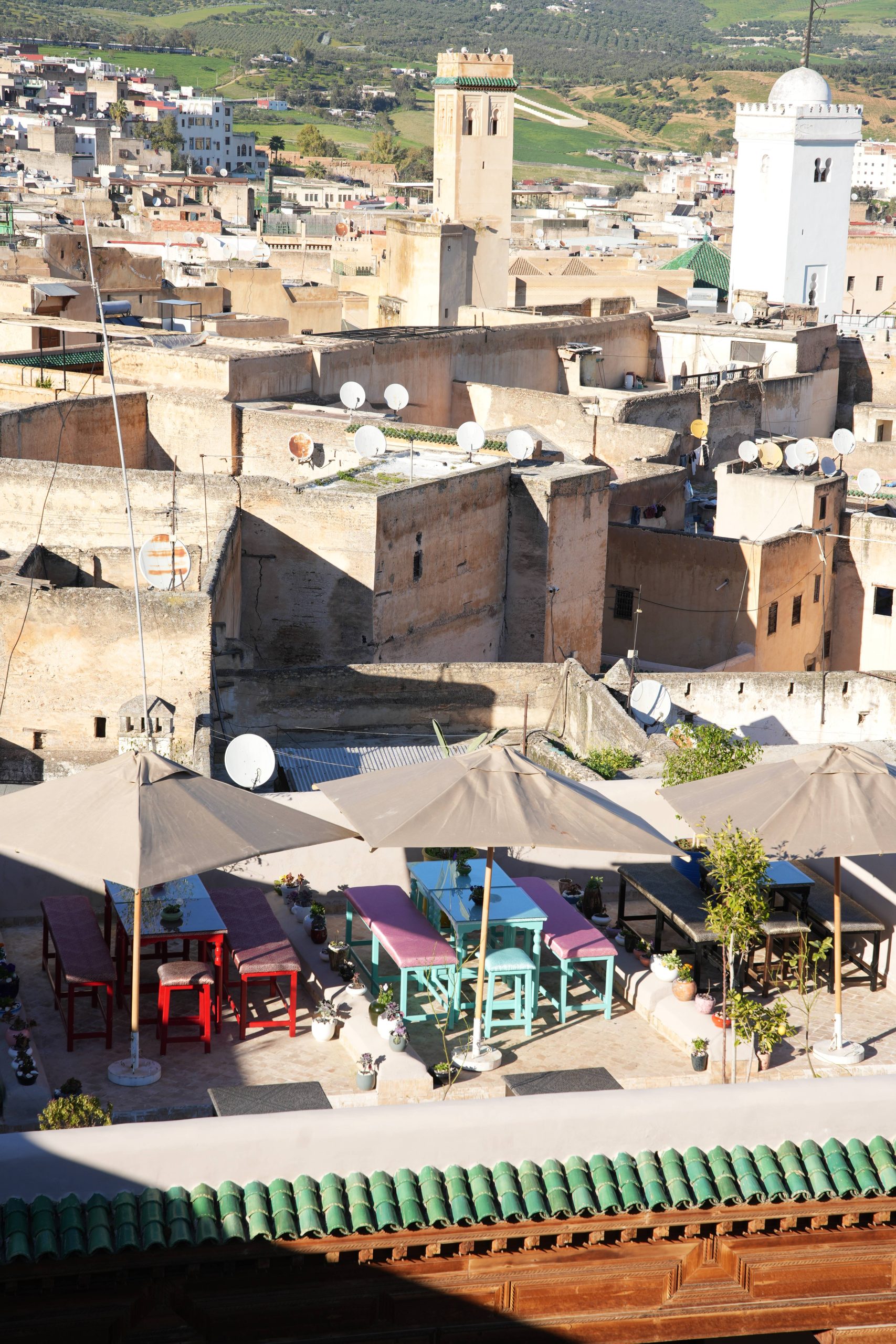
凯塔宁旅馆在苏丹穆莱·哈桑一世在位期间兴建,旨在古老麦地那的中心为商人及其货物提供庇护之所。
数十年间,棉花、亚麻与手工艺商人穿梭于它的庭院——旅馆的生活节奏与阿尔卡塔宁市集同步律动。
The Medina of Fès is inscribed as a 联合国教科文组织 World Heritage Site, the fondouk counted among its living monuments.
露台 above the old courtyard becomes Fez Medina Rooftop Restaurant & Lounge — panoramic dining, reached by elevator.
麦地那的商旅客栈——楼下为货物庭院,楼上为旅商客房,是酒店的前身。
From kettan, linen — the guild of linen merchants who gave this fondouk and its quarter their name.
棉花商人聚居的街区,非斯古麦地那中心的历史市集街巷之一。